




Why Reservations from Airbnb & Booking.com Are Dropping — And What Guest House Owners Must Do Now
In Bali, the conversation about unregistered accommodation has largely focused on villas—but the implications go much deeper, especially for smaller properties like guest houses. For owners of Maha Residence Balangan, understanding this imbalance is essential to navigating the future of Bali’s tourism market.
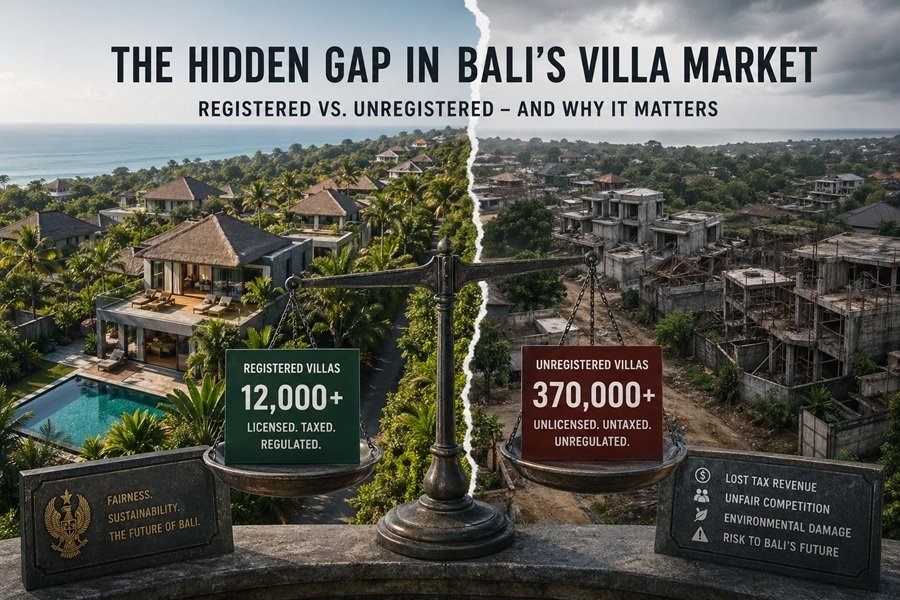
The scale of the villa issue is now widely acknowledged. Recent industry data suggests that while only around 12,000 villas are officially registered, as many as 370,000 units may be operating or listed online across platforms. This gap is not just a statistical anomaly—it reflects a systemic shift where a large portion of Bali’s accommodation supply operates outside formal regulation.
At the same time, broader estimates indicate that up to 30% of all accommodation types in Bali—including villas, homestays, and guest houses—may not be properly registered. This is where the discussion becomes more nuanced. Unlike villas, guest houses are not necessarily experiencing the same extreme scale of unregistered growth, but they are still part of the same grey ecosystem.
The difference lies in structure and visibility. Villas are often developed as standalone investment properties, frequently marketed globally and scaled aggressively. Guest houses, on the other hand, are typically smaller, locally operated, and sometimes integrated into family compounds. Because of this, the level of non-compliance in guest houses tends to be less industrialized, but still present—often due to lack of awareness or complex licensing requirements rather than deliberate avoidance.
In areas like Balangan Beach and the wider Bukit Peninsula, this dynamic is becoming increasingly visible. Large numbers of villas—many unregistered—are entering the market rapidly, while guest houses grow more slowly and organically. This creates an uneven competitive environment.
For guest house owners, the biggest impact is indirect but powerful.
The first challenge is market distortion. Unregistered villas can offer lower prices because they avoid taxes, permits, and compliance costs. This affects the entire pricing structure of Bali accommodation. Guest houses, which traditionally compete on affordability, suddenly find themselves squeezed between budget travelers and underpriced luxury villas. The result is a race to the bottom that erodes profitability.
The second challenge is demand fragmentation. Despite strong tourist arrivals, occupancy rates for legal accommodations have not always improved, partly because visitors are being distributed across a much larger and often unregulated supply base. For guest houses like Maha Residence Balangan, this means less predictable bookings, shorter stays, and increased reliance on last-minute reservations.
Another issue is perception. When tourists stay in unregulated properties that fail to meet expectations—whether due to poor maintenance, misleading listings, or lack of safety standards—it affects how they view Bali as a destination. This reputational risk does not stay isolated. Guest houses, even those operating responsibly, can be impacted by a general decline in trust.
Regulatory pressure is also becoming a defining factor. The government has already begun cracking down not only on villas but also on illegal guest houses and homestays. This signals a shift: the era of loosely regulated accommodation is coming to an end. For guest house owners, this creates both risk and opportunity.
The risk lies in compliance. Many guest house operators may not fully understand the licensing requirements, which can include zoning approvals, business registration (NIB), and tourism permits. As enforcement increases, those who are not prepared could face penalties, closure, or delisting from booking platforms.
But there is also opportunity. As regulation tightens, the number of unregistered properties is likely to decrease or be forced into compliance. This could rebalance the market over time, benefiting operators who are already legal and well-managed.
Looking ahead, guest house owners in Bali face a more competitive and regulated future. The challenges are not just about competing with villas, but about adapting to a changing system.
For Maha Residence Balangan, success will depend on clarity of positioning and operational discipline. Guest houses cannot compete with villas on scale, but they can compete on authenticity, service, and price transparency. Travelers increasingly value experiences that feel local and personal—something guest houses naturally offer.
At the same time, compliance will become a key differentiator. In a market where many properties still operate in grey areas, being fully licensed and transparent can build trust with both guests and platforms.
The imbalance between registered and unregistered villas may have started as a villa problem, but its impact now extends across the entire accommodation ecosystem. Guest houses are not immune—they are part of the same market forces, even if their role is different.
In the years ahead, the gap between legal and illegal operations will likely define who survives and who struggles. For guest house owners, the path forward is clear: adapt early, stay compliant, and focus on what makes smaller properties uniquely valuable in a rapidly changing Bali tourism landscape.